
Introduction:
Kind gestures in hard times are capable of making a tremendous difference. Kazi Foundation says that goodness is more powerful than unhappiness, and it makes us stronger to overcome the bad ones. This is what we wish to do to help society through acts of caring. This blog demonstrates how simple acts of kindness can heal a heart that is broken. A smile at a person we have never seen, or a hand at a person in need, makes us all realize that we are human. Be a part of this great new venture and watch how benevolence would change lives.
The Silenced Trauma of Hope Pain.
Pain of an emotional nature is subdued. It manifests itself in the form of loneliness, sadness, or the silence and gloom of poverty. These pains are not necessarily visible on the surface as is the case with a broken arm. They are still able to destroy the spirits of people and make them feel isolated. Research has discovered that money-related problems can be a major cause of depression and anxiety in the long term, which is difficult to break out of. However, this is where compassion can come in as a soothing cure.
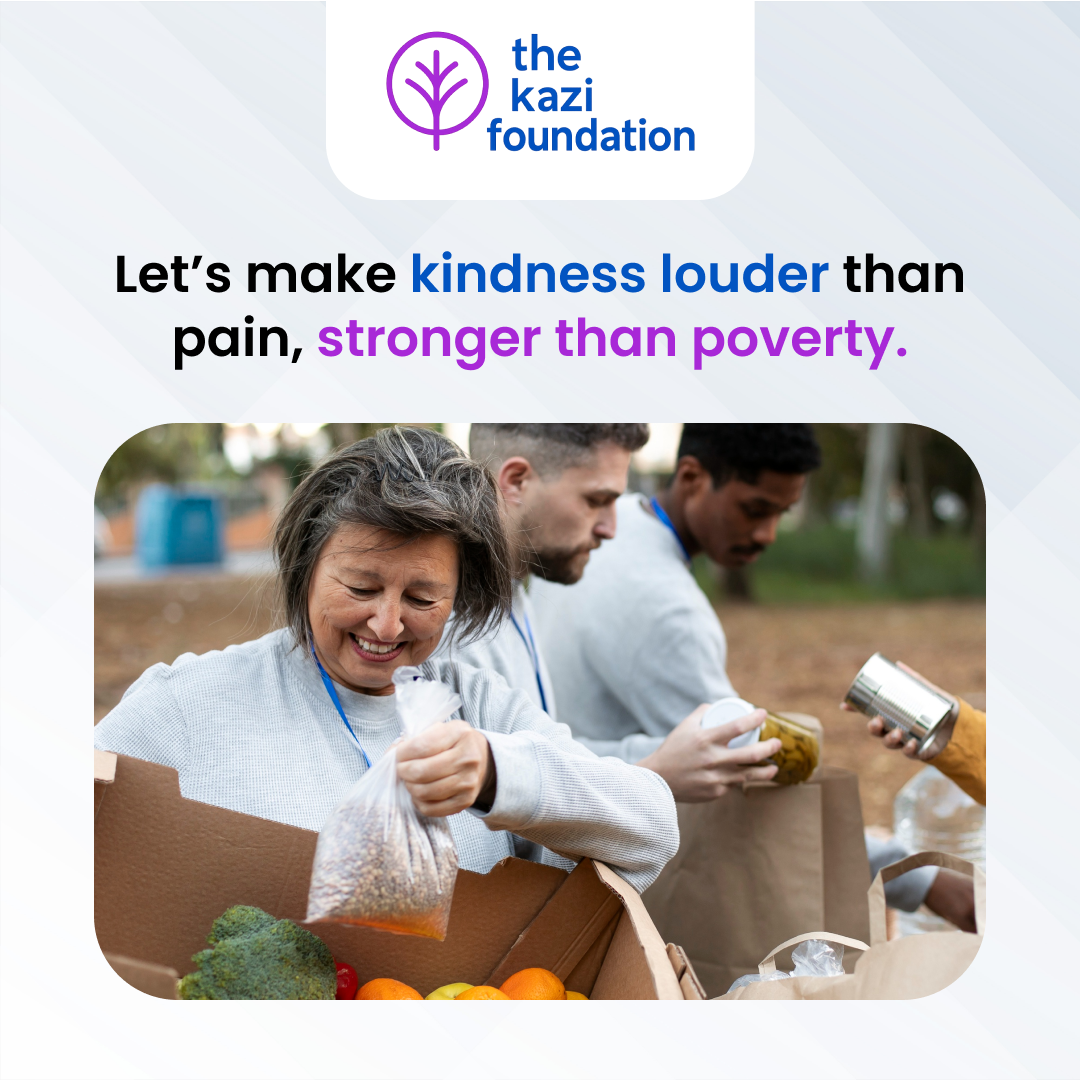
Consider a while: Do you ever think one of those bad days was lifted when you heard someone? It is kindness, little-hearted things that demonstrate to people that their emotions count and unite them. We have experienced the light in dark days at The Kazi Foundation as volunteers in the food drives, such as the one in the photo, where people are smiling as they pack boxes of fresh produce. Such actions do not heal pain immediately however, it seeds hope, as people are perceived and appreciated.
Big Healing, Little Acts: Relatable Excerpts.
Consider the example of a single mother in a busy city, Sarah. She is afraid of how to feed her children, and she is a non-person since she lost her job. One afternoon, a member of the outreach program of the Kazi Foundation arrives in front of one of the residents carrying a grocery bag and a note, which says to her: you are not alone, we are with you. That act did not fix all her issues, but it helped her forget some of her emotional burden by assuring her that she fits there.
Or consider Alex, who is a teenager but who lost a person he loved. He was lonely, but a school mentor arranged a group where he could share stories with friends about acts of kindness that they had done. Alex also opened up and hugged, laughed, and accepted the offers of help by the group, which started mending his aching heart. These are tales that contain common miracles. A study in psychology found that these actions increase the level of oxytocin- hormone of love, and we become less stressed, and our mood is restored. By incorporating more compassion into our daily lives, we can all be the curers of those who are around us.
The goodness will work against the emotional hurt that poverty entails. In the absence of the basic needs, hopelessness and shame may step in. Even the simplest things make a difference in the survival versus thriving of a story, like volunteering at a soup kitchen or sending a positive message.
Building an End to Poverty in Loving Power.
Poverty is not simply the deprivation of adequate resources; it also mulls down the attitude of individuals towards themselves. The Kazi Foundation has been providing food, shelter, education, and emotional support through the programs that help to break this cycle. Benevolence is even greater than poverty since it creates resilience by using this two-step process.
Take any village that has been hit by an economic meltdown, and the individuals are unemployed. Volunteer skill classes and positive talks were provided. Members leave behind new competencies and high hope. These effects of such actions are experienced: cured individuals can serve others, and it gives strength to whole communities. On the optimistic side, charity bridges the gaps among human beings and the masses in the efforts to combat poverty.
Getting to know good people.
It is not as complicated as it may seem to be nice, and the good vibes will come back to the recipient as well as the giver. Do not start with a big step: compliment your colleague, enroll in a local shelter, and simply ensure that your friend is alright. These small things are what mend emotional pain and provide a connection that could withstand the storms of life.
To continue the fire, you can make a list of what you were doing well and what you are feeling. Get lost in the online community of groups such as The Kazi Foundation. All you have to do is to remember that all the acts of kindness help, even the little ones, providing your body with that good and genial feeling.
Conclusion:
The stories demonstrate that such small kindness gestures can mend a broken heart and fight against poverty. They make us remember that hope is not a passive process but a process that is based upon warm and intentional relationships. The Kazi Foundation wishes to make this vision a reality in life, though we need assistance.
Go to kazifoundation.com and make a donation, volunteer, or post your own story of kindness. Be nicer–beginning with you.

Comments are closed